
Since 1990, BIOFACH in Nuremberg has been regarded as the world’s leading trade fair for organic food and is therefore far more than a traditional trade fair. It is the international meeting place for producers, processors, retailers, associations and service providers along the entire value chain. This very mix is what makes it so special. In this article, we report from BIOFACH and explain why sustainability is such a relevant topic in the food sector.
Julia Wlasak-Eisenberger from Terra Institute live on site
On 13 February 2026, Julia Wlasak-Eisenberger from Terra Institute was present at BIOFACH in Nuremberg and held inspiring discussions with companies from the food sector on supply chains, data requirements, carbon accounting and decarbonisation. It became very clear how strongly market requirements are changing: for many businesses at BIOFACH, sustainability has long been conscious practice. At the same time, it is increasingly becoming a structured management task, because customers, trading partners and larger buyers are demanding traceable data and reliable information.
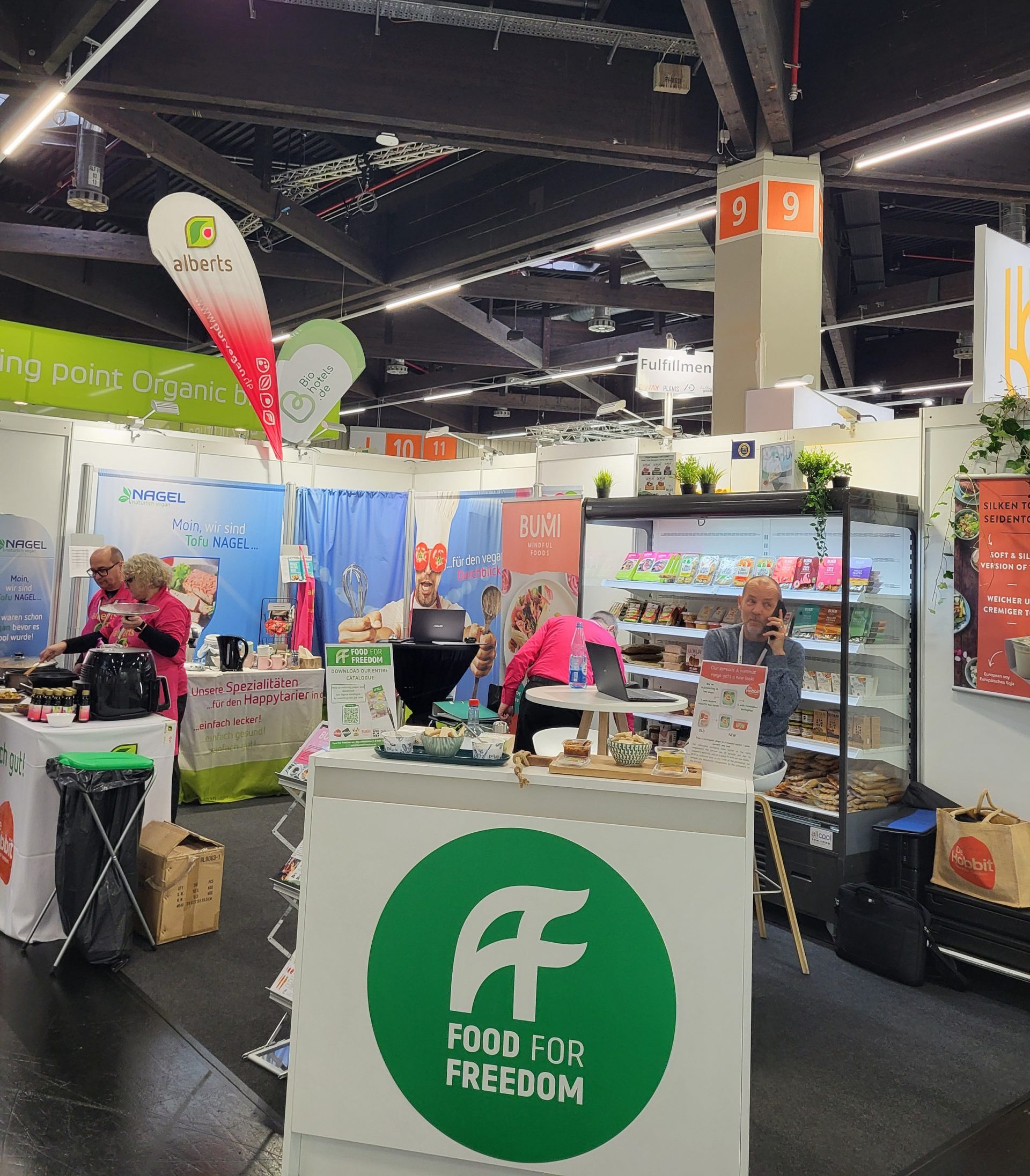
This is particularly relevant for the food sector. Supply chains are often complex, international and heavily shaped by agricultural raw materials. This means that a large part of the relevant environmental and climate impacts does not arise only within a company’s own operations, but along the upstream value chain. It is therefore increasingly important to set up a practical data framework at an early stage. Many companies are already collecting key information today, for example on energy, packaging or procurement. In future, however, it will be even more crucial to structure data along the supply chain, such as information on raw materials, preliminary products, transport or suppliers.
Solutions for companies in the food sector
BIOFACH clearly shows that the sector is not starting from scratch. Many companies have already been doing a great deal, often for years. Regional sourcing, long-term supplier relationships, quality standards, packaging optimisation or efficiency measures are already established practice in many businesses. What is often missing, however, is the systematic visibility of these achievements. This is precisely where a central lever lies. What is not properly documented is difficult to manage internally and can only be communicated externally to a limited extent.
Corporate Carbon Footprint (CCF): Sustainability in the food sector
For many companies, the CCF is the most meaningful entry point to record emissions in a structured way and identify the biggest hotspots. In the food sector, these hotspots are often found in purchased raw materials, preliminary inputs and transport. A robust CCF creates transparency and provides the basis for an effective decarbonisation strategy. It not only helps companies with internal prioritisation, but also enables them to respond professionally to external requirements from retailers or business partners.
SBTi: Science-based climate targets for companies
In this context, SBTi (Science Based Targets initiative) is also becoming noticeably more important. At BIOFACH, it became clear that SBTi is no longer a topic reserved for large corporations. An increasing number of medium-sized companies are observing that market requirements, for example due to customer demands in food retail, are moving towards science-based climate targets. The Science Based Targets initiative (SBTi) serves as an important frame of reference for defining emissions targets in a credible and transparent way. For companies in the food sector, SBTi is becoming increasingly relevant because they are often part of larger supply chains and will be required to provide corresponding evidence more frequently in the future.
VSME: Voluntary standard as an opportunity for SMEs
At the same time, BIOFACH also offers an important perspective on what already exists. Many businesses already have strong sustainability performance that has not yet been made sufficiently visible. Voluntary frameworks such as VSME (Voluntary Sustainability Reporting Standard for SMEs) can be very helpful here. Even though it is voluntary, it supports companies in presenting existing activities in a structured way and preparing the right information in a transparent format. This is particularly valuable for small and medium-sized enterprises that need pragmatic solutions and still have to respond professionally to requests from the market.
BIOFACH as an international future radar for sustainability in the food sector
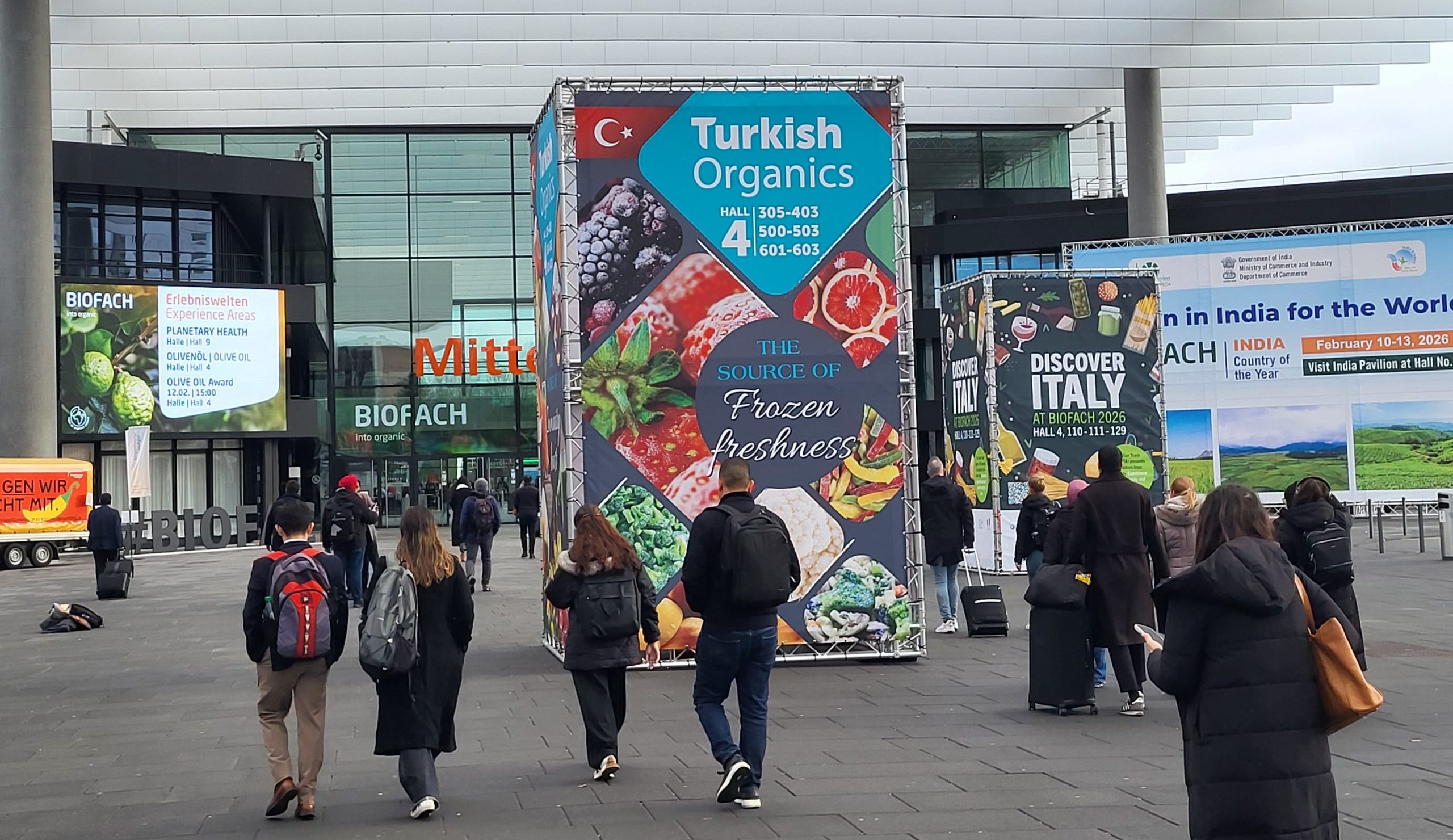
As the world’s leading trade fair, BIOFACH also has a strong international character. Exhibitors and products from all over the world demonstrate how global the organic food and natural cosmetics sector is today and how profoundly it is changing. Shifting consumer preferences, rising environmental awareness and new requirements for transparency and data quality are increasingly shaping the debates. This makes it all the more important for companies not only to implement their sustainability work, but also to position and communicate it strategically.
Conclusion: Competitive advantages through structured sustainability
From Terra’s perspective, the conclusion is clear. BIOFACH is not just a showcase for products and trends, but an important early indicator of the issues that will shape the food sector in the future. Supply chains, data quality, CCF, decarbonisation and SBTi will continue to gain in importance. Companies that now start to act in a structured way and make their existing achievements visible will create security, credibility and a clear competitive advantage.
Would you like to know which sustainability data in your supply chain are truly relevant today and how you can approach CCF, decarbonisation and VSME in a pragmatic way? Terra Institute supports you with a clear, actionable approach tailored to the food sector.
Author

Julia Wlasak-Eisenberger
Master in Global Studies & MBA in Sustainability Management
Julia has many years of sustainability expertise at universities (including a focus on Education for Sustainable Development) and in companies (sustainability, climate and education strategies). She is a lecturer at the University of Salzburg.
Questions? j.wlasak@terra-institute.eu or arrange a short appointment.
FAQ on BIOFACH and sustainability in the food sector
1. Why is a CCF important for food companies?
For companies in the food sector, a CCF is important because a large share of emissions arises in upstream stages such as agriculture, raw materials, preliminary products and transport. A structured CCF in line with recognised standards (e.g. Greenhouse Gas Protocol) creates transparency, forms the basis for decarbonisation strategies and supports reporting (e.g. CSRD, EU Taxonomy).
2. What role does the Science Based Targets initiative (SBTi) play for companies in the food sector?
The Science Based Targets initiative (SBTi) provides a framework for setting climate targets in line with scientific findings and the 1.5‑degree goal. For companies in the food sector, SBTi is becoming increasingly relevant because trading partners, investors and larger customers are more frequently demanding science-based targets. SBTi helps define ambitious, realistic reduction pathways and substantiate a company’s climate strategy credibly in the eyes of the market. More on this: Science Based Targets in food retail.
3. What does VSME mean and how does the standard support small and medium-sized enterprises?
VSME stands for “Voluntary Standard for SMEs” and is a voluntary reporting framework specifically designed for small and medium-sized enterprises. It helps SMEs to present their environmental, social and governance (ESG) topics in a structured way without having to adopt the full complexity of large, comprehensive standards. With VSME, companies can make their existing sustainability performance visible, create transparency for stakeholders and prepare for upcoming requirements – with a pragmatic, resource-efficient approach.
4. What is BIOFACH?
BIOFACH connects products, markets, knowledge transfer and strategic exchange in a way that is unique in its density. Organic is not only presented here, but brought to life with all the senses – as a marketplace of opportunities, a place for innovation and a platform for the future of the sector.
5. What makes BIOFACH so important for food companies?
BIOFACH in Nuremberg is the world’s leading trade fair for organic food and serves as a central meeting point for producers, retailers, associations and service providers. It is more than a product fair: at BIOFACH, market trends, regulatory developments, data quality requirements and topics such as CCF, decarbonisation and SBTi are discussed in depth. For companies in the food sector, the trade fair is therefore an important place to network, learn about best practices and set strategic directions towards sustainability.
6. How does Terra Institute support companies with the Corporate Carbon Footprint (CCF)?
Terra Institute supports companies step by step in creating and using their Corporate Carbon Footprint. This includes, among other things, data collection, calculation of emissions in Scope 1 and 2, as well as an optional materiality analysis for Scope 3, the preparation of data for sustainability reporting (e.g. CSRD, GRI, EU Taxonomy) and the analysis of reduction potentials. On this basis, Terra Institute develops climate targets and decarbonisation strategies together with companies.
7. How can the VSME approach be used?
Terra Institute uses the VSME framework to provide especially small and medium-sized enterprises with a structured yet pragmatic basis for their sustainability reporting. Using VSME, relevant ESG topics can be identified, prioritised and presented in a clear reporting format. This facilitates internal management, creates transparency for stakeholders and helps to make a company’s sustainability performance visible in the market – for example in the context of BIOFACH.
8. What services does Terra Institute offer as a sustainability consultancy?
Terra Institute is a consultancy specialised in sustainability and transformation. Its service portfolio includes, among other things, sustainability strategies, sustainability assessment, sustainability reporting, climate and CO₂ management (including CCF), decarbonisation, circular economy, ESG training, supply chain and biodiversity management as well as advisory services on sustainability communication. The aim is to support companies in their sustainable and digital transformation with a practical, data-driven approach.