Climate Risk Analysis
– Act proactively, grow sustainably – recognize risks, seize opportunities
/ OUR OFFER
Climate Risk Analysis
Understanding, assessing, and proactively managing climate risks to build future-proof strategies and resilient business models.
Climate risk analysis is a key tool for systematically identifying, assessing and managing the impacts of climate change on companies, organisations and public institutions. The focus is on both physical risks – such as extreme weather events, rising temperatures or changing precipitation patterns – and transition risks arising from the shift towards a climate-friendly economy, for example through new regulatory requirements, market changes or technological innovation.
As part of a climate risk analysis, company-specific vulnerabilities and potential damage scenarios are identified. The aim is to strengthen the resilience of business models, supply chains and infrastructure against climate-related changes and to derive strategic options for action.
Our sustainability consultants support you in carrying out climate risk analyses.
How do customers benefit from our experience?
✔ Early risk minimisation: By systematically identifying and assessing physical and transition climate risks, you can take adaptation measures at an early stage and thereby minimise potential damage and costs.
✔ Strengthening resilience: Proactive climate risk management increases your company’s resilience to climate-related disruptions and safeguards the continuity of your business processes, even in times of crisis.
✔ Transparency & trust: Disclosing and managing climate risks builds trust among stakeholders, customers and partners and strengthens your reputation in the market.
✔ Strategic basis for decision-making: Climate risk analyses provide the foundation for forward-looking investment and location decisions and enable the development of sustainable business models.
✔ Increasing brand value: Companies that actively address climate risks increase their brand value and company valuation and position themselves as pioneers in the field of sustainability.
✔ Meeting reporting obligations: A robust climate risk analysis supports compliant reporting in accordance with the Corporate Sustainability Reporting Directive (CSRD) and the EU Taxonomy Regulation by ensuring transparency regarding climate-related risks and taxonomy-aligned activities.
THE COMPANIES
THAT HAVE CHOSEN US





























Why choose Terra?
Professional expertise in climate risk management
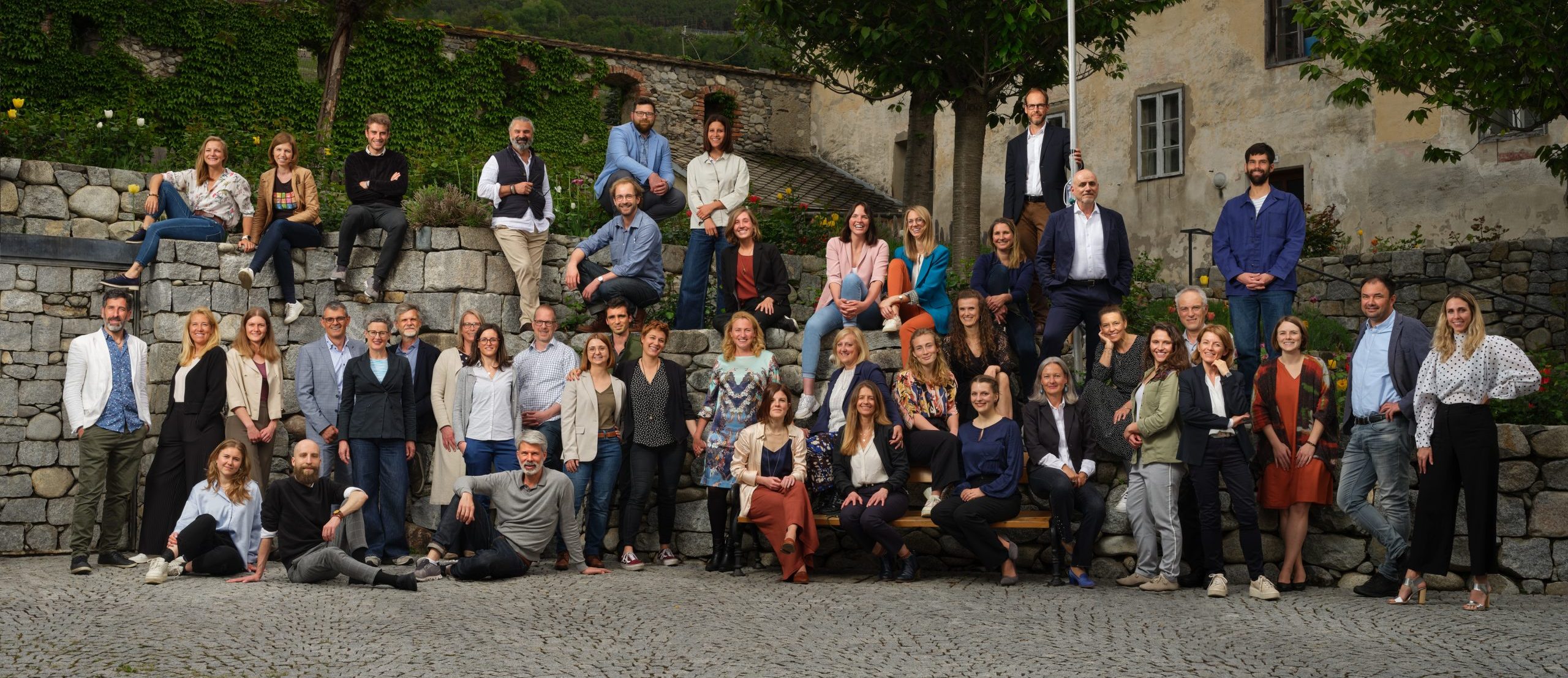
Our interdisciplinary team of experts has many years of experience in developing and implementing climate strategies and climate risk analyses.
Individual, tailored solutions
Every company is unique – that is why we do not develop standard concepts, but instead work with you to create bespoke strategies precisely tailored to your specific challenges, objectives and framework conditions.
Holistic and systemic consulting approach
We do not view climate risks in isolation, but in the context of your entire value chain and corporate strategy. Our approach integrates both external dimensions (such as emissions management, climate reporting and supply chains) and internal dimensions (such as corporate culture, change management and communication). In this way, we create sustainable solutions that make your company resilient and future-ready in the long term.
Practical focus and implementation strength
We support you not only with the analysis, but also with the development and implementation of specific measures. Our consulting is designed to achieve measurable results and to guide your organisation step by step on the path towards climate neutrality and sustainable value creation.
Reliable partnership and continuous support
Throughout the entire process, you will have a personal point of contact who understands your individual needs and responds flexibly to new challenges.
What is our approach?
Our approach is based on the UBA guidance, the requirements of the EU Taxonomy Regulation and the structure of ISO 14091.
- Preparation (scoping)
Definition of objectives & regulatory framework
Together, we define objectives, scope and the relevant regulatory requirements (including the EU Taxonomy and CSRD).
Identification of sites & activities
Recording all relevant sites, economic activities and system elements along the value chain.
Structuring & asset assessment
Breakdown into overarching categories and detailed system elements.
Determination of the service life of key assets – where this exceeds 10 years, a mandatory scenario-based forward-looking analysis is carried out on the basis of recognised IPCC climate scenarios.

- Screening of climate hazards
Identification of relevant hazards
Systematic identification of all climate hazards in accordance with Annex A of the EU Taxonomy (e.g. heat, heavy rainfall, flooding, drought).
Software-supported hazard analysis
Using specialised climate risk software (CLIMADA Technologies) and available climate data, a spatial prioritisation of potentially relevant hazards is carried out for each site.
Function-related relevance assessment
Assessment of the exposure of individual system elements.
The final determination of material hazards is validated jointly in a workshop.
- Carrying out the risk assessment
The quantitative risk assessment is based on the CLIMADA methodology.
CLIMADA is a scientifically developed modelling platform for analysing physical climate risks. It enables the systematic linking of climate scenarios, hazard models and damage functions, thereby ensuring a transparent, data-based risk assessment.
The assessment is based on three core components:
- Exposure: Geographical location and full mapping of all relevant assets and system elements.
- Hazard: Modelling of current climate risks and future developments, taking recognised climate scenarios into account.
- Vulnerability: Analysis of the sensitivity of assets, including underlying damage functions.
By combining these three factors, climate risk is quantified and made comparable. This enables a sound prioritisation of risks as well as a robust basis for strategic decisions and regulatory disclosure obligations.
- Development and assessment of adaptation measures
Based on the identified risks, we develop concrete, prioritised options for action to reduce risk and support climate adaptation.
We distinguish between:
- short-term organisational measures
- technical protective measures
- strategic, long-term transformation measures
The result is a sound basis for decisions on investments, site selection and compliant reporting within the framework of regulatory requirements.
With this structured approach, we ensure that your climate risk analysis not only meets regulatory requirements, but also creates real added value for the sustainable development of your company.
Get started now – Your climate risk analysis with Terra!
Would you like to identify climate risks early and position your company for the future? We support you with a sound climate risk analysis and practical recommendations for action!
Contact us now and lay the foundation together for resilient and sustainable corporate development.
Use the opportunity to turn risks into opportunities – we accompany you on your path!
Frequently asked questions about climate risk analysis – FAQs
1. What is a climate risk analysis?
A climate risk analysis is a structured process for identifying, assessing and managing risks and opportunities arising from the direct and indirect effects of climate change on companies. It covers physical risks (e.g. extreme weather events), transition risks (e.g. new regulations, market changes) and liability risks (e.g. climate litigation or reputational damage).
2. Why is a climate risk analysis important for companies?
Climate risk analyses help companies identify potential hazards at an early stage, assess vulnerabilities and develop targeted adaptation strategies. They are also a key prerequisite for meeting regulatory requirements such as the CSRD or the EU Taxonomy and for strengthening resilience and competitiveness.
Download our checklist now!
3. What benefits does a climate risk analysis offer?
It enables your company to identify risks early, manage them in a targeted way and seize opportunities. It also supports compliance with regulatory requirements, strengthens resilience and improves positioning vis-à-vis investors, customers and other stakeholders.
Contacts
If you have any questions or would like assistance with introducing and using Terra Footprint, we would be happy to advise you and accompany you on your journey towards greater sustainability.
The easiest way to get in touch with us is here!
Please note our Privacy Policy and conditions.
Thank you very much! We look forward to receiving your message!
office@terra-institute.eu
Tel. +39 0472 970 484.
-


BRESSANONE HEADQUARTERS
Terra Institute Srl
Via Sant'Albuino 2
39042 Bressanone (BZ)
Italy
INNSBRUCK OFFICE AUSTRIA WESt
Terra Institute Austria FlexCo
Karl-Kapferer-Straße 5
6020 Innsbruck
Austria